

A $10 Hat and an $89 Hat Cost the Same to Make. Brand Is the Difference.
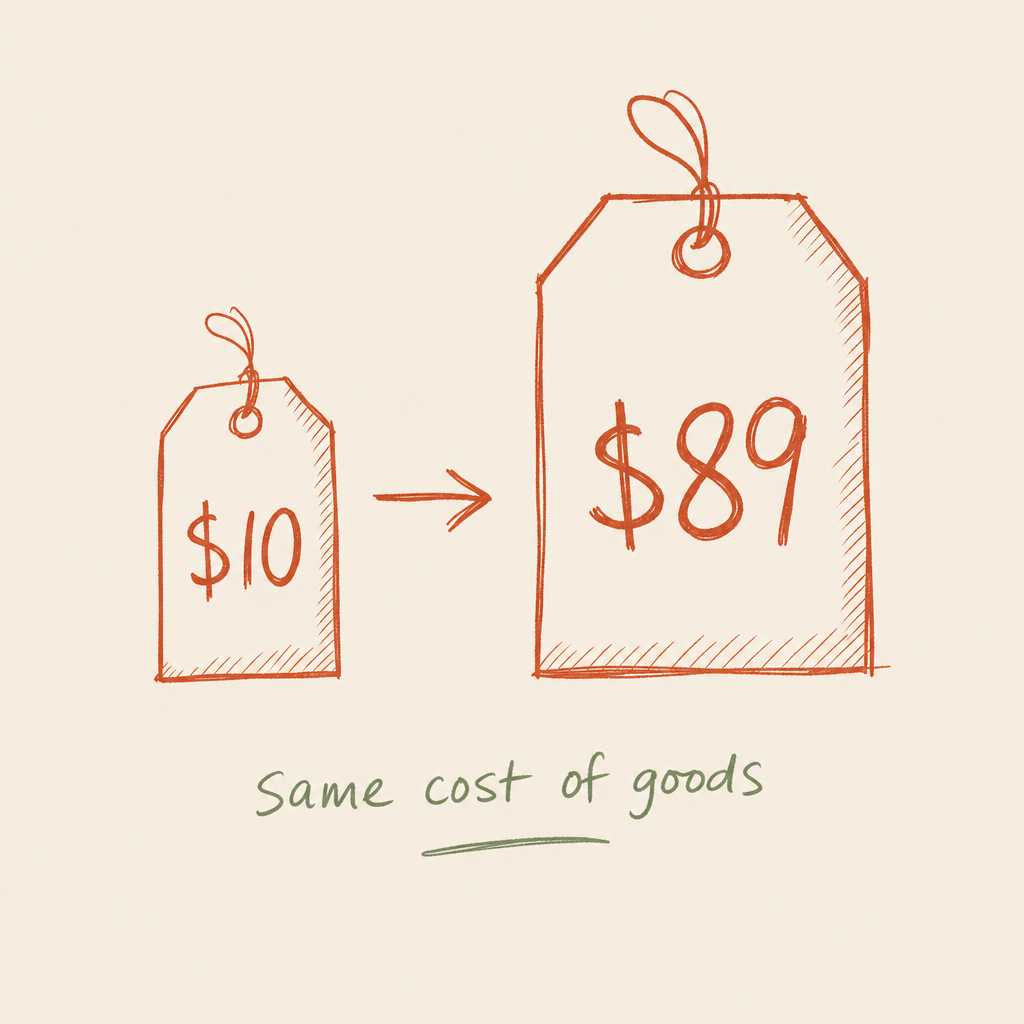
Two hats come off the same production line. One sells for $10. The other sells for $89. The cost of goods is identical. The only thing that changed is the name on the label and what that name makes people feel. That gap, $79 of pure margin on the same piece of fabric, is the whole game. It's called a brand, and it's the only thing that lets you charge more without building a better product.
We run direct response for a living, so this is going to sound strange coming from us: the fastest money is in the offer, but the biggest money is in the brand. One you can switch on this week. The other takes years. Most businesses only ever do the first, then wonder why they're stuck competing on price forever.
Brand is not your logo
Forget colours, fonts, and the tagline your last agency charged you for. Alex Hormozi has the cleanest definition we've found: a brand is the deliberate pairing of your business with things your ideal customer already likes. Good branding pairs you with what they want, value, and respect. Bad branding pairs you with what they don't. The logo is just where you store the association. It isn't the asset. The feeling is.
Here's why that matters in dollars. A brand does three things to your numbers:
- It lowers what it costs to get a customer. People click and buy from names they recognise, so your ads work harder for the same spend.
- It raises what each customer is worth. A brand lets you charge two to ten times more for the same product. That's the $10 hat becoming the $89 one.
- It lowers your risk. Repeat buyers and word of mouth mean you lean less on paid ads just to survive.
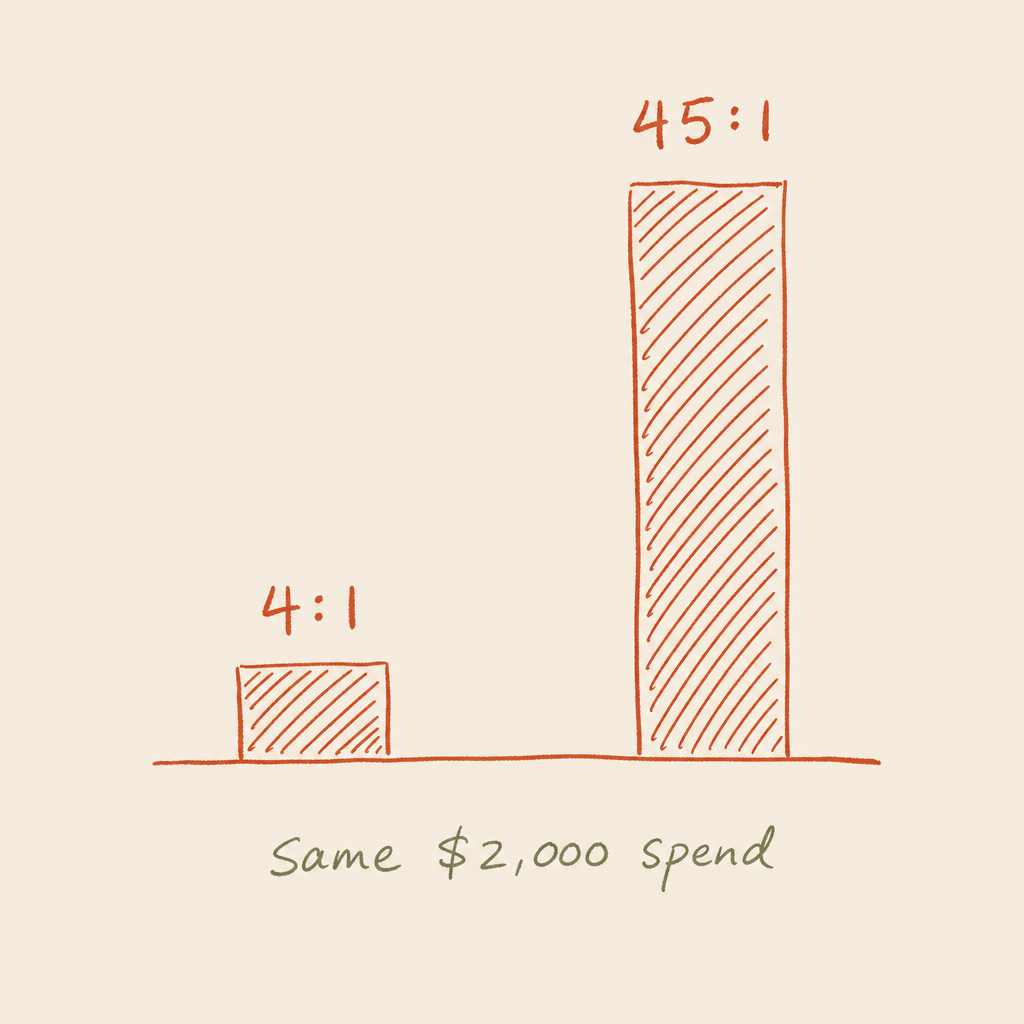
The compounding is the part that stops people in their tracks. Same $2,000 in ad spend. An unbranded business might pull a 4:1 return. A branded one pulls 45:1. That's eleven times the return on the exact same money. Hormozi calls branded returns "absurd," and they are. The catch is they take time to show up, which is exactly why most businesses skip it and stay on the discount treadmill.
Branded returns are absurd. They just take time, which is why most businesses skip it.
Why storytelling is the tool that builds the moat
A brand is built from two things: influence, which is how likely someone is to choose you over the alternative, and direction, which is whether they're moving toward you or away. Advertising buys you reach. It puts you in front of more people. But reach without influence is just noise people scroll past.
Storytelling is how you turn reach into influence. Every story you tell is one more pairing of your business with something your customer cares about. Tell enough of the right ones, consistently, and you've built a brand. Tell none, or tell random ones, and you've got a logo and a price tag, competing with everyone else who has a logo and a price tag.
This is why a single clever ad never builds a brand. A brand is a bouquet. Each story, each piece of content, each ad is one flower. Tied together over time they become something a customer recognises and trusts. One nice video is one flower. Nobody builds a moat with one flower.

How to actually build it
Here's the system we run, stripped down to what you can act on this quarter.

1. Get specific about who it's for. Your ideal customer has four traits. They're in a market that's growing, they're in real pain over the problem you solve, they can afford you, and you can actually find them with advertising. If you can't tick all four, every branding decision after this is a guess. So narrow it. Trying to appeal to everyone means saying less to anyone.
2. Learn what they actually like. Not their age and postcode. A persona is an archetype, not a demographic. "Women 30 to 35" tells you nothing. "A mum with young kids who needs one dress that works for the school run and a Friday night out" tells you everything: the problem, the language, the moment they buy. Write down what your customer wants, what they're struggling with, what they value, and who they already respect. That's the emotional territory you're going to occupy.
3. Tell stories that pair you with those things. Every good ad or post is a persona, an angle, and an offer. The persona is who it's for. The angle is the specific argument you're making to them: the problem you agitate, the belief you challenge, the before and after you show. The offer is what they get. Change the angle and the same product speaks to a different person. Most businesses only ever talk about features, which is why their marketing all sounds the same.
4. Let other people tell the story for you. There's a hierarchy of who people believe. What you say about yourself counts for the least. What others say about you counts for more. What they experience when they buy counts for the most. So front-load proof. Real customers, in their words, ideally on a shaky phone camera, because raw beats polished every time. A testimonial from someone exactly like your prospect does more work than any headline you'll write.
5. Make the product deliver. Your advertising shapes your brand in the short term. Your product shapes it in the long term. You can't brand your way out of a bad product. A great story attached to a letdown just makes people churn faster and tell their friends quicker. The moat only holds if the experience matches the promise.
The payoff: you stop competing on price
Once you've got influence and direction, the maths flips in your favour. You close at higher prices. Your offers stop needing to be discounts, which matters more than it sounds, because a flat discount quietly eats your margin. Knock 25% off your price and you often need to be roughly 50% more efficient on your ads just to break even on the same profit. A brand people want lets you build offers around value instead: a bundle, a bonus, a guarantee, a reason to buy now. Same headline price, far better margin, and you're not training your customers to wait for the next sale.
The discount gets you this month's sale. The brand gets you the next five years of them, at a price your competitors can't touch.
The one thing nobody wants to hear
This takes time. Brand returns compound over 12 to 36 months, not 12 to 36 days. Short term, a sharp offer will outperform your brand content, and that's fine, run both. But long term the brand always wins, and the businesses that own their category are simply the ones that kept telling the same true story to the same people every single day while everyone else chased the next trend.
So pick who you're for. Learn what they love. Pair yourself with it, over and over, and make the product back it up. Do that for a few years and you've built the one thing a competitor can't copy with a lower price: a brand people will pay a premium to buy from.