

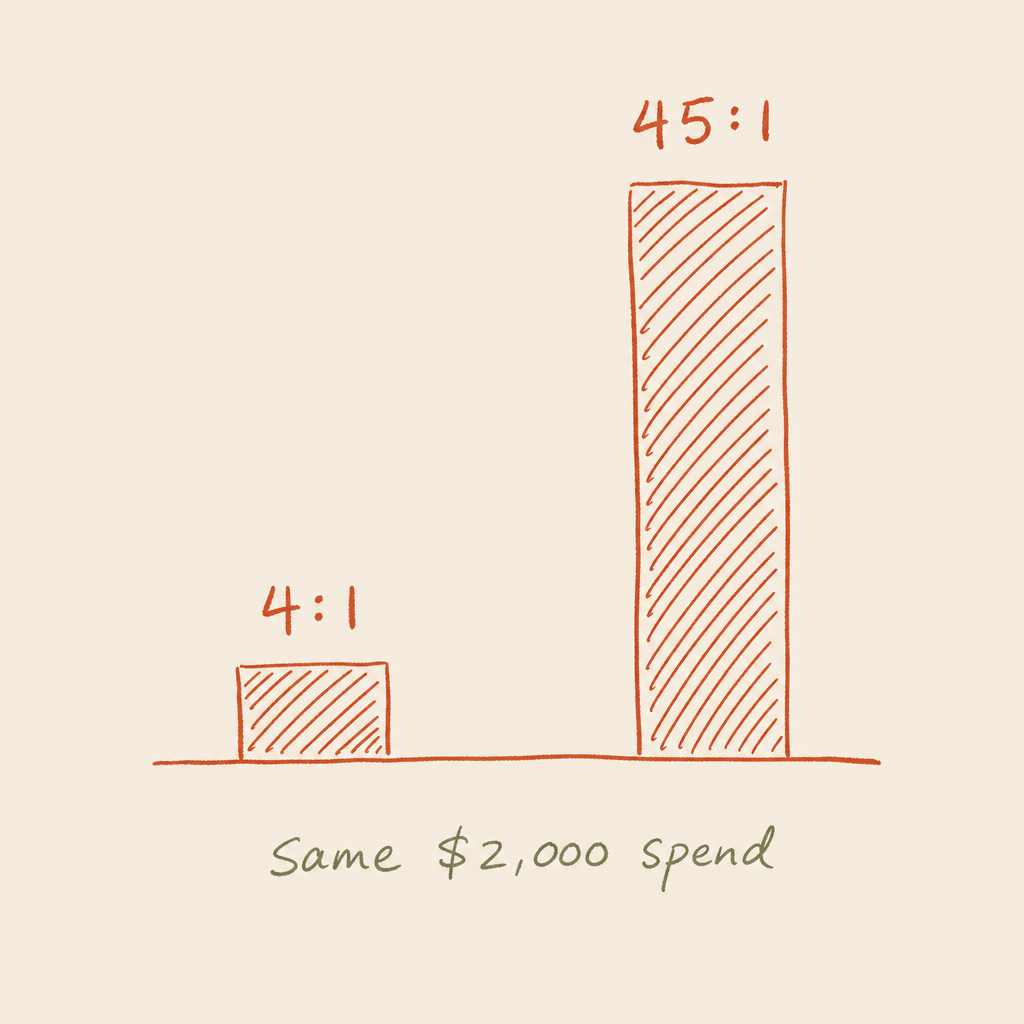


An excavator attachment manufacturer came to us with a problem you can't fix by working harder. Millions of dollars of finished stock sat in a warehouse, retail channels were moving it too slowly, and there was no way to sell direct to the operators who actually wanted the gear. Every week that stock sat still, it was capital the business couldn't touch. Ninety days later they had $1.2 million of qualified pipeline and a direct sales system that hadn't existed before. Here's what we built, and exactly what that figure does and doesn't mean, because pipeline numbers get thrown around loosely in this industry.
First, What $1.2M in Pipeline Actually Means
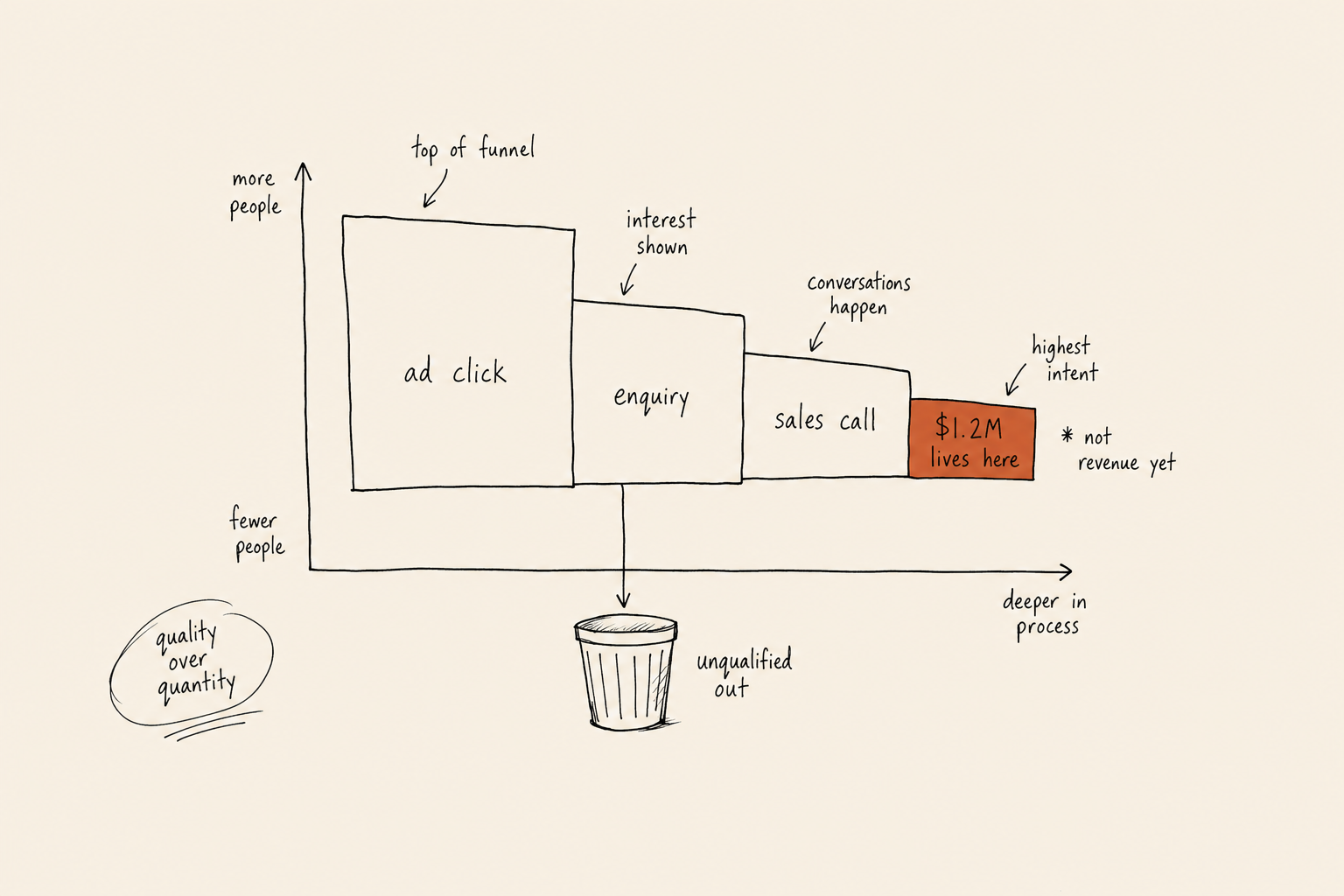
Let's do the uncomfortable part before the victory lap. $1.2 million is pipeline, and pipeline is money that hasn't been banked yet. Plenty of agencies are happy to let you blur that line. We're not, because the number is only worth quoting if you know exactly what it's made of.
Here's the bar every deal had to clear: a qualified opportunity is a named buyer the sales team has actually spoken to, with a machine the gear fits and a dollar value attached to the deal in the CRM. A form fill doesn't count. A tyre-kicker asking for a price doesn't count until someone qualifies them. The $1.2 million is the sum of the deal values that cleared that bar, drawn from more than 300 prospects captured and tracked across the 90 days.
A lead is a maybe. A qualified opportunity is a name, a machine and a dollar value in the CRM.
If you're a sceptical owner reading a case study (you should be), the first question to ask any agency quoting pipeline is "qualified by whom, against what?" If the answer takes longer than a sentence, the number is decoration. Ours took one sentence, and you just read it.
The Starting Point: Cash Frozen in a Warehouse
The brief was blunt. Move product, free up capital, spend as little as possible doing it. This is what the business looked like on day one:
- Millions tied up in unsold inventory
- Retail channels moving too slowly to make a dent
- No direct-to-customer sales at all
- No CRM, no lead capture, no follow-up
- A marketing budget with no room for guesswork
The obvious move was a fire sale. It would have shifted some units, gutted the margin, and trained the market to wait for the next discount. So we built a channel.
Selling to Operators Who Hate Being Sold To
The buyers are excavator operators and contractors. A lot of them are owner-operators who run their machines hard and have no patience for cheap attachments that won't survive the work. Proof is the only currency they accept.
One feature of this market shaped the whole campaign: it's a regional game. Excavators work where ground is being moved, so we ran tightly focused regional campaigns aimed at the operators most likely to need this exact gear. No nationwide spray and pray on a budget this lean.
The Build, in Order
Five pieces over 90 days:
- Landing pages for the hero products. One page per flagship product, matched word for word to the ad that drove the click. The sales team kept hearing the same objection, some version of "will this hold up on my machine?", so each page answered it head-on: the gear working under load, the build quality behind it, and the fit for their machine spelled out plainly.
- Creative that showed the product doing the job. Video and stills of the tools on real machines solving real problems, stacked with proof from customers who already ran the gear and rated it. Clear and simple, with no cleverness for its own sake.
- Tight regional targeting. Campaigns aimed at the regions and operator types most likely to buy. When budget is tight, where you spend matters as much as what you say.
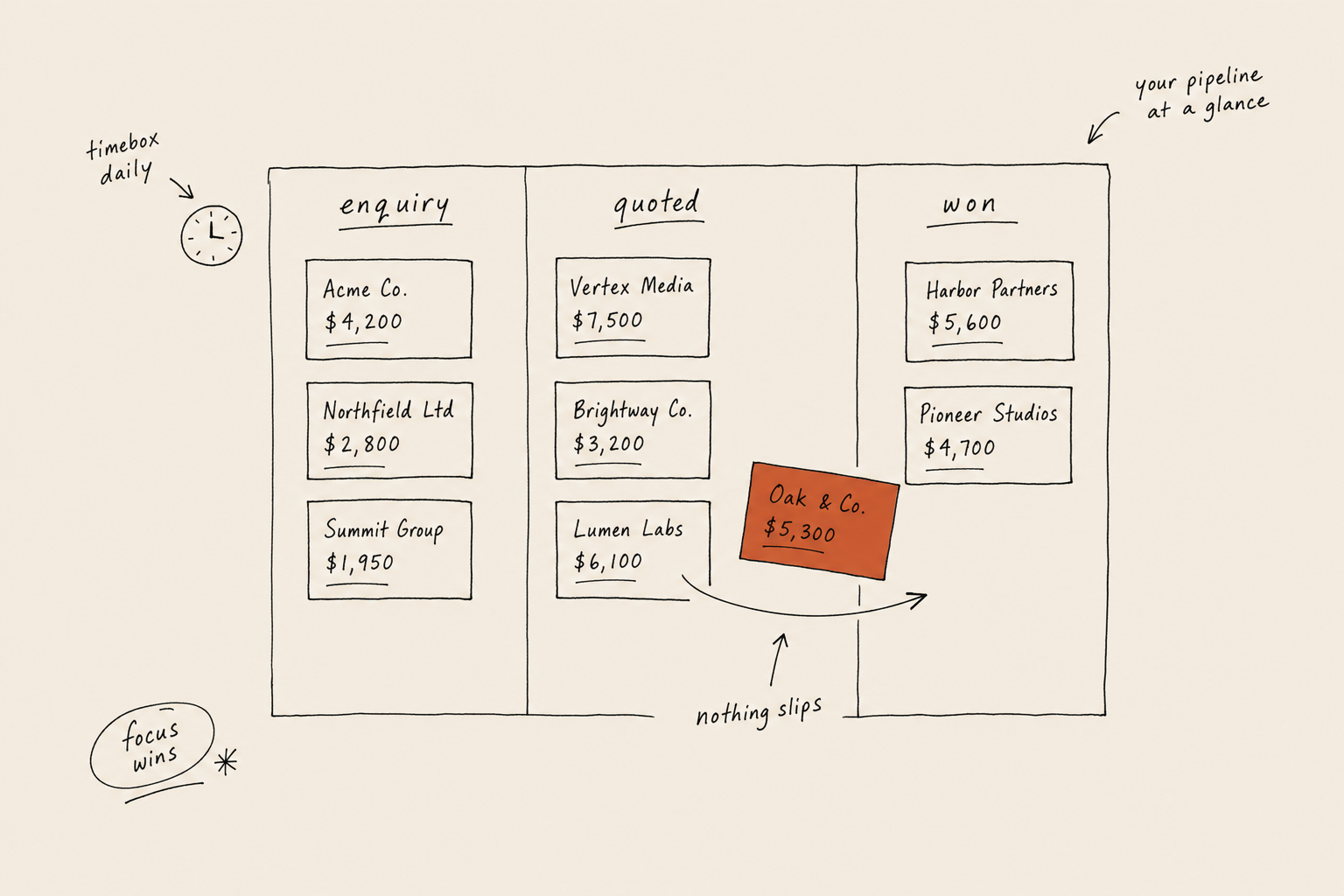
- A CRM doing the boring work automatically. Every enquiry dropped straight into the CRM as a deal via Zapier, tagged by stage with notes attached. The sales team could see where every deal sat and what needed doing next, so follow-ups stopped slipping through the cracks.
- Automated nurture between calls. Follow-up sequences kept prospects warm without adding a single hire to the payroll.
The Results at Day 90
- $1.2 million in qualified opportunities, defined the strict way, in a system that didn't exist at day zero
- 300+ prospects captured, organised and tracked in a CRM built from scratch
- A complete marketing-to-sales pipeline, visible from ad click to deal stage
- Follow-up running on automation, so nothing goes cold while the sales team is on the phone
Attachments are a considered purchase, so those deals close over the weeks and months that follow. Because every one carries a stage and a dollar value, the client can watch pipeline turn into invoices in real time. The sprint took 90 days. The engine it built keeps filling long after.
Why the Engine Keeps Filling
That long tail is also where the reporting gets slippery. When a buyer takes weeks to decide, day-one form counts tell you next to nothing, and killing a campaign on that noise starves a system that was quietly working. So we read this pipeline on the customer's clock: weekly, against deals as they mature, never on a single day's leads. We also track which ad opened each conversation, because the one that stopped an operator mid-scroll rarely gets the credit at signing. Score the whole path from first click to closed deal and you keep funding the ads doing the quiet work up top, the ones a last-click view would starve. The only scoreboard that settles the argument is the one finance keeps: pipeline that becomes invoices. A number that can't reconcile to that is decoration, however tidy it looks in the ads manager.
Keeping it full comes down to feeding the winners. A handful of ads and pages start most of the conversations that close, so those become the template for the next round, and we keep them running long after the team has grown sick of the sight of them. The logic is plain: your buyer sees an ad once, and the market refreshes every week as new operators pick up new jobs, so a proven ad stays fresh to the people who count. When a strong performer finally stops pulling new deals, the fix lives in the creative: a sharper execution, a new angle on the same offer. A channel that's stalled is almost always a creative-quality ceiling dressed up as a saturated market.
The Takeaway
When inventory has your capital pinned down, the reflex is to discount or push harder through the channels you already have. The stronger move is usually to build a direct line to the people who want what you sell, lead with the proof they need, and put a system behind it that turns interest into tracked, dollar-valued deals. That's what one disciplined 90-day sprint bought this manufacturer.
If you're sitting on stock that won't move, or quoting a pipeline number you couldn't define in one sentence, book a pipeline audit with us. Thirty minutes on a call, we'll map this same system onto your product and show you where the deals are leaking. You'll leave with the plan either way.