
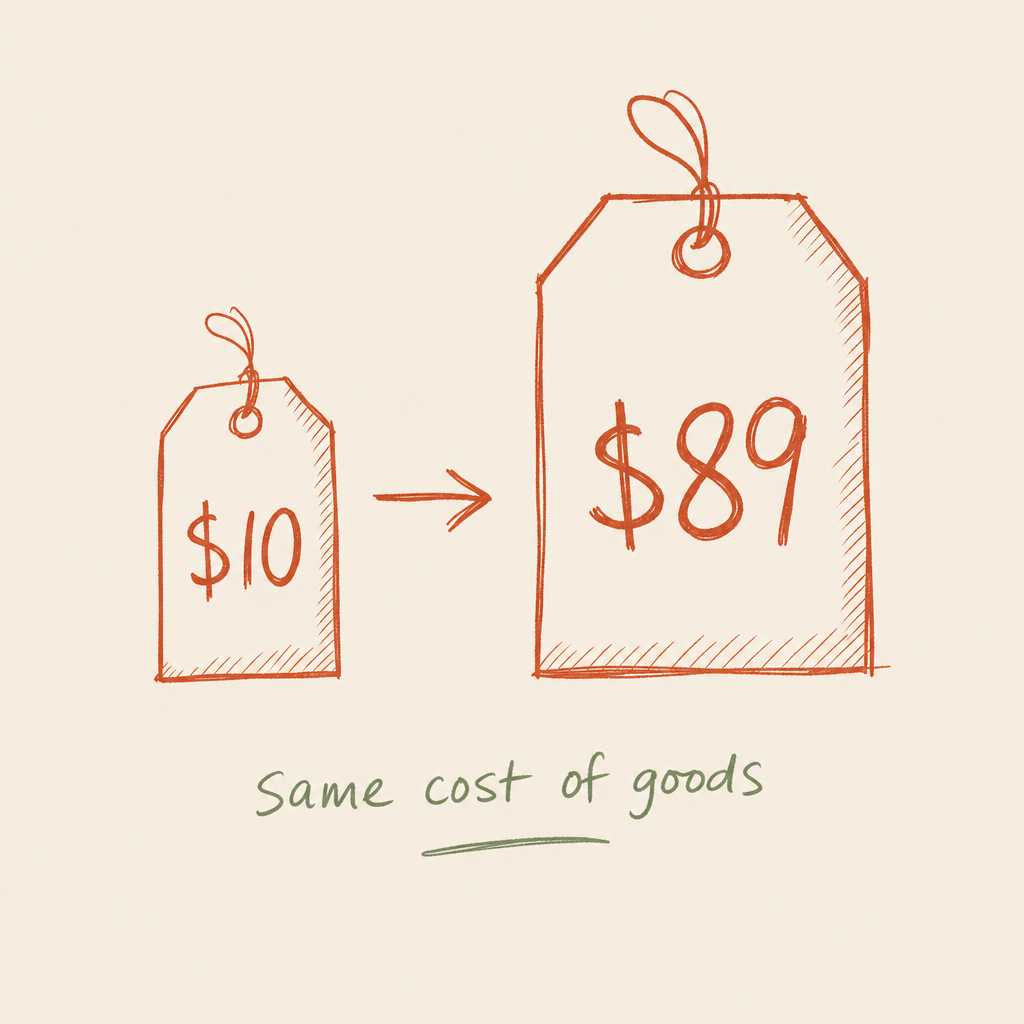
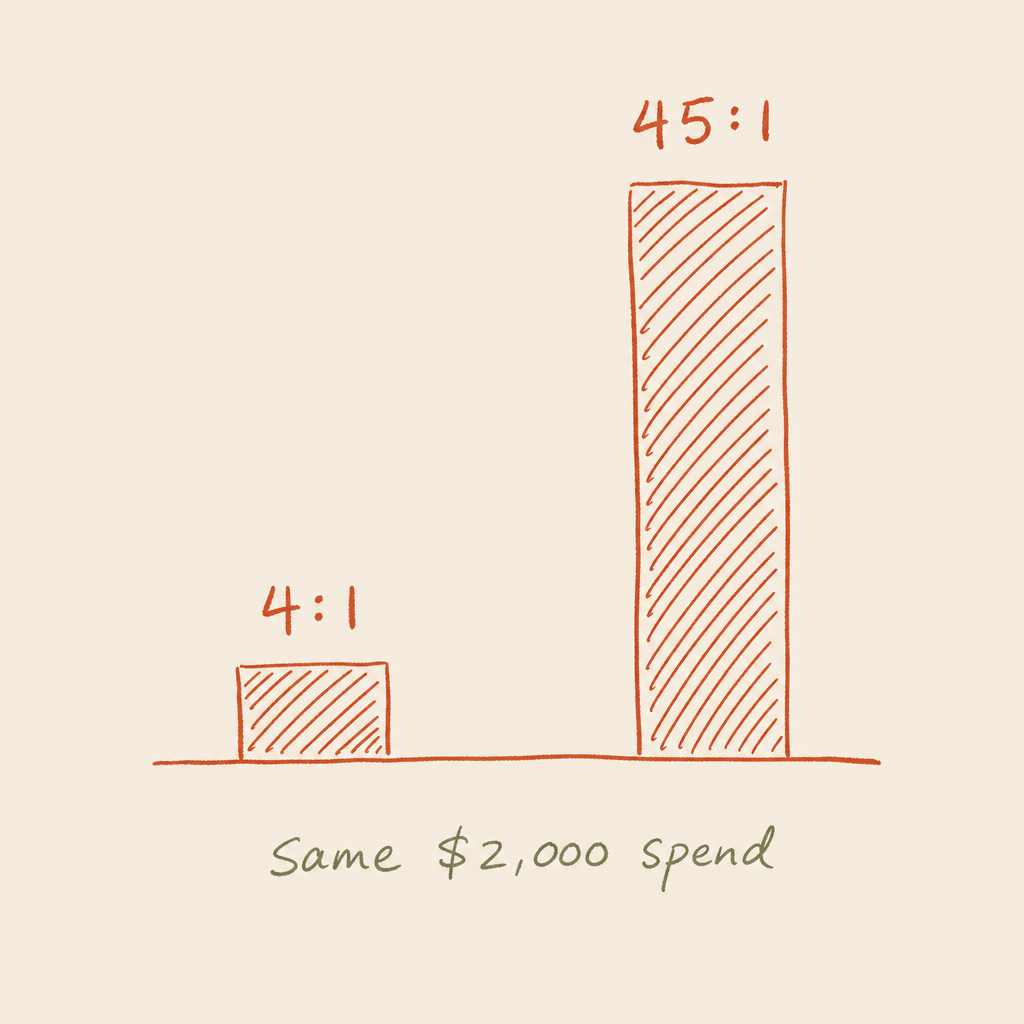


On paper this one looked unwinnable. A Kiwi firm selling complex work to big organisations, with competitors whose marketing budgets dwarf theirs, was spending $50,000 a year on digital marketing and getting 35 cents back for every dollar. Each lead cost $1,500. Twelve months later the same account was returning $3.91 per dollar and a lead cost $160. No viral moment, no rebrand, no extra budget until the very end. Here's exactly how it happened.
Where They Started
When they came to us, the numbers were grim in a very specific way. Roughly $4,200 a month was going into digital marketing, and a 0.35 ROAS meant the whole year's spend returned about $17,500 in attributed revenue. The ads had become a subscription to losing money. At $1,500 a lead, a genuinely good sales team spent most of its week waiting for the phone to ring.
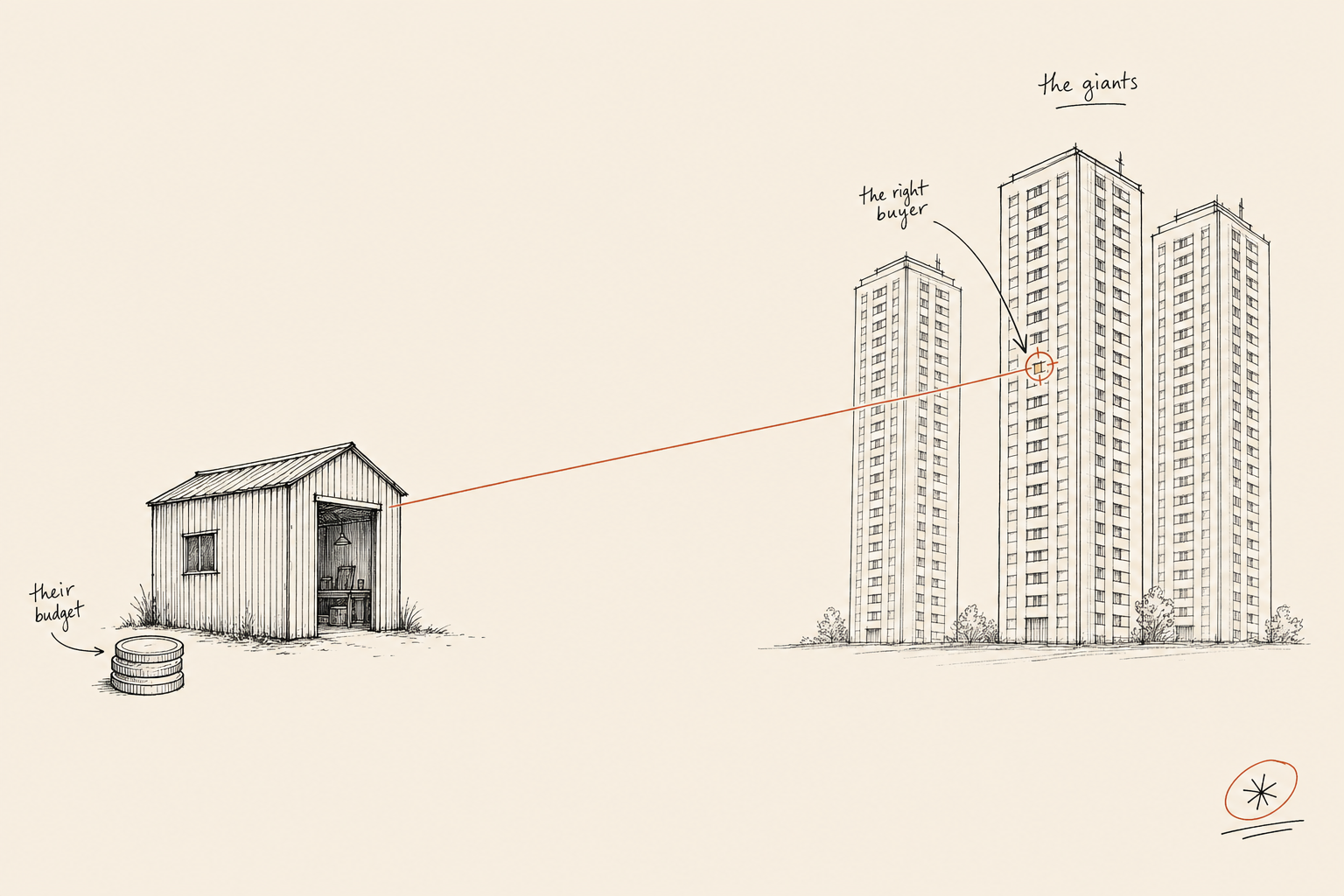
The competition made it worse. The companies this firm pitches against are industry giants who can waste money on marketing for years without noticing. Classic David and Goliath, and Goliath usually wins these by default, because he can outlast every mistake. Here's the part that gave us something to work with. A giant's budget buys reach and patience. It doesn't buy a sharper argument. When cost per lead climbs, big teams tend to blame a saturated market, and the real ceiling is almost always how well the ad wins over a cooler, more sceptical buyer. That's a craft problem, and craft is the one thing a small team can out-execute a giant on.
The Staircase Down From $1,500
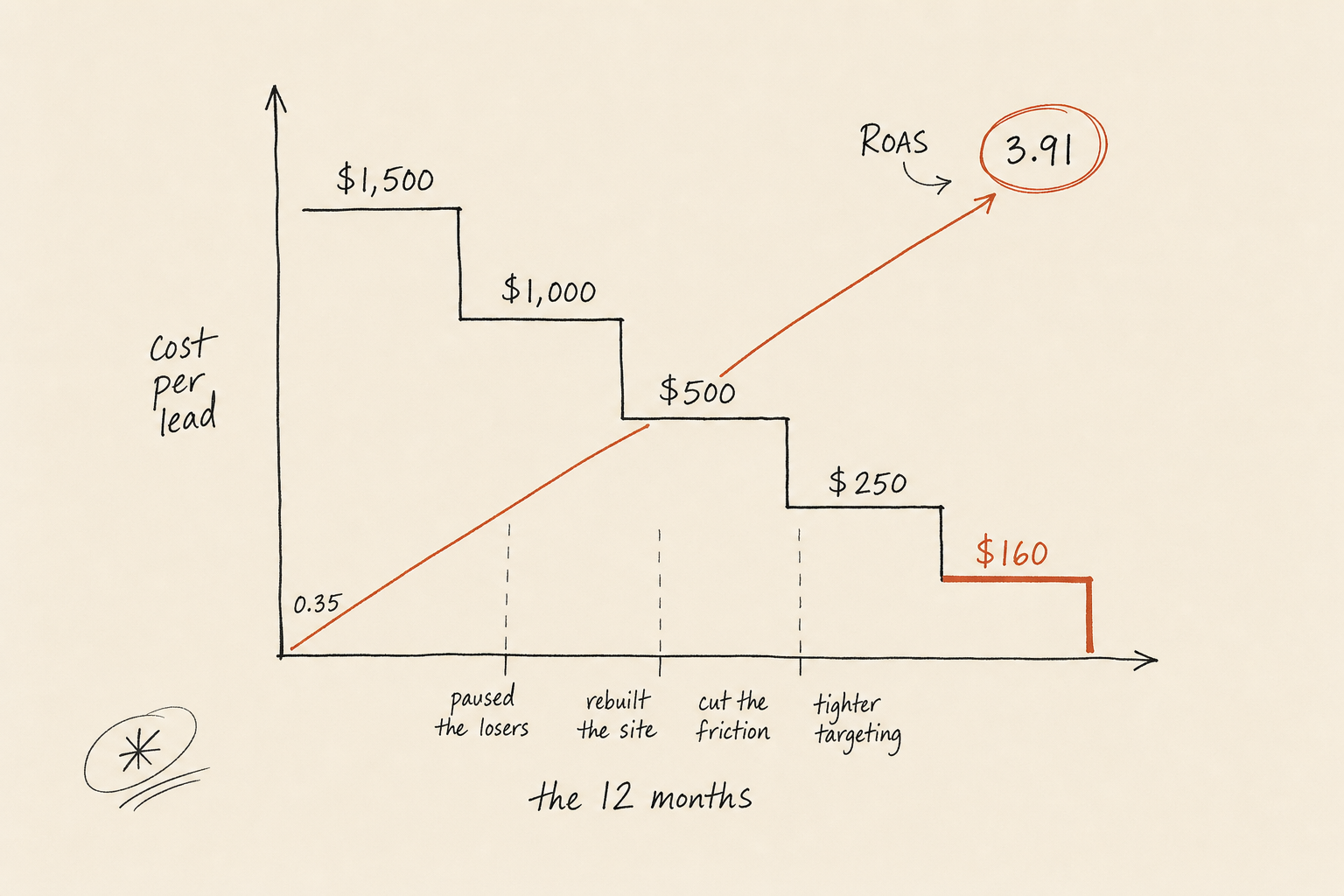
The whole turnaround fits on one chart. Cost per lead fell in stages, and every stage came from one specific fix: $1,500 to $1,000, then $500, then $250, then $160. That final number is a 90% cut in the cost of every new opportunity, for the same product, in the same market, against the same competitors.
It's tempting to change everything at once. We didn't, because when you change ten things and the numbers move, you've learned nothing. One fix at a time meant every drop on that chart has a cause we can name, and a playbook we can run again.
Every time we halved the cost per lead, profit jumped. Cutting it four times in a row was the whole strategy.
What We Rebuilt, in Order
The order matters as much as the list, because each fix funded the next one.
- Paused the bleeders first. Before anything new went live, we shut down every campaign that was losing money and kept the handful that broke even. That single unglamorous move took the cost per lead from $1,500 to around $1,000, and it cost nothing to make.
- Rebuilt the website around the buyer's problem. The old site listed features. The new one opens with the problem, shows the fix working, and proves it. Clear copy for the people who read, short animations of the system in action for the people who skim.
- Removed the friction. We redesigned every step from first click to sales conversation, then added video of the team explaining their approach on camera. A busy buyer can now size them up without booking a call.
- Aimed the ads properly. We stopped targeting a job title and started targeting a problem: the specific, expensive thing that makes someone inside a big organisation go looking in the first place. A callout that tight reaches fewer people and converts far more of them, which is exactly the trade a small budget wants. Tight Google and LinkedIn campaigns pointed at those buyers, with location-specific landing pages that repeat the ad's promise word for word, so a cold click never lands somewhere the promise has vanished. This is the stretch where $500 leads became $250 ones.
- Armed the sales team. Using jobs-to-be-done, we worked out the real reasons customers hire this firm, then turned that into collateral a buyer understands in one read. Leads stopped stalling between enquiry and proposal.
Why Google and LinkedIn, When We Sell Meta First
Fair question, because Meta is our home turf. The answer is the buyer. This client's customer is someone inside a big organisation with a specific, expensive problem to solve. That person searches Google the day the problem bites and scrolls LinkedIn between meetings. Meta earns its keep when you're putting a product in front of people who can decide on the spot; a big B2B contract has a longer fuse and a committee attached. Channel follows the buyer, and this buyer told us exactly where to find them. There's a discipline underneath that call, too. We got the two channels the buyer actually uses working hard before anyone floated a third. A new platform only earns a spot when total new business goes up. A flattering dashboard number on its own means little, and an account this size has plenty of room left in its main channels before that question is even worth asking.
Where They Are Now
- ROAS of 3.91 and still climbing.
- Cost per lead of $160, down from $1,500.
- Multiple Fortune 500 companies in the pipeline, which means bigger deals with longer tails.
- Ad spend doubled last quarter, because spending more finally made sense.
- The website pulling in organic enquiries and phone calls on its own.
Run the maths on the original budget and the swing is stark. The same $50,000 that once returned about $17,500 now returns roughly $195,000 in attributed revenue. That's why the spend doubled: when the machine works, more fuel is the obvious move. They're hiring again too, and this time it's because they can see exactly where the next chunk of growth is coming from.
How We Knew It Was Actually Working
A deal with a committee attached doesn't close in a day, so day-one platform numbers on any change we made were mostly noise. We set the review cadence to the speed this buyer actually decides. Changes went live in batches, then we read them over weeks, so a real improvement was easy to tell apart from a quiet fortnight. Kill a campaign on a bad Tuesday and you bury a winner that only needed another fortnight.
We also trusted the books over the dashboard. A platform will happily claim more revenue than the company actually banked, so the number we watched was pipeline and closed work measured against spend, and that's the 3.91 the books agree with. For a firm this size that's the whole measurement stack you need: cost per lead, a return figure the accountant recognises, and the patience to read both on the buyer's clock rather than the platform's.
What This Proves
Strip the story back and four things did the heavy lifting.
- Kill losing spend before you add anything. The first $500 of improvement came from pausing campaigns, and it took days.
- Make your value obvious in seconds. Busy buyers skim, so show the thing working and repeat the ad's promise on the page it points to.
- Iterate in big cuts. One serious cut to your cost per lead is a good quarter. Four in a row, $1,500 down to $160, is a turnaround, and each cut pays for the next fix.
- Aim beats budget. The giant outspends you every quarter, and he rarely out-aims you. One buyer named by their problem, carried by the same promise from ad to landing page, is the edge a small account actually has.
If your ad account reads like the first half of this story, send it to us and we'll audit it. We'll show you which campaigns are burning money, where your first halving is hiding, and what we'd fix in what order. The audit takes us a few days. The $1,500 leads cost you every single month.