


Most brand copy fails for one boring reason: it talks about the brand. Founder's vision, the award shelf, fifteen years of proud heritage, a mission statement nobody asked for. Your customer scrolls past all of it, because none of it answers the only question they brought to the page: will this fix my problem or not?
Customer-led messaging flips the camera around. You stop narrating from behind the counter and start writing from inside the buyer's head. Done right, the copy reads like the thought the reader was already having. That's when conversion rates move.
If your reader can't see themselves in the first line, they'll never reach the buy button.
Why Brand-First Copy Quietly Bleeds Money
Here's the trap. The people writing the copy know the product cold, so they write for someone who already cares. The person reading it has never heard of you and cares about exactly one thing: themselves. That gap is where ad spend goes to die.
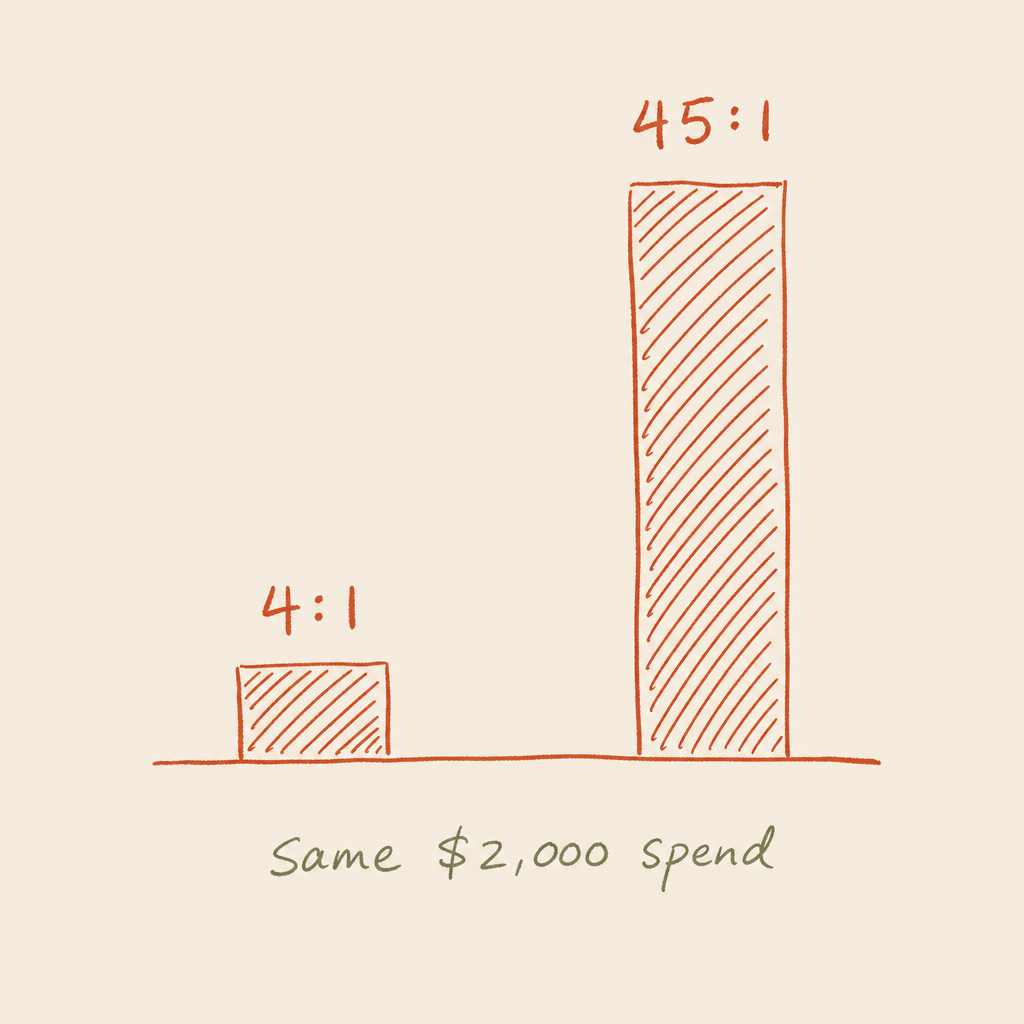
We watched a Kiwi manufacturer live inside that gap for years. When they came to us they were spending $50k a year on marketing, paying $1,500 for every lead, and their return on ad spend was 0.35. They were losing money on every dollar while competing against industry giants. Their website read like a capability statement: specs, machinery, company history. So we rebuilt the site and the ads around the problems their customers were actually trying to solve, written in the language those customers used on sales calls. No new product, no bigger budget. The cost per lead fell in stages, one fix at a time: $1,500, then $1,000, then $500, then $250, then $160. Twelve months on, their ROAS sat at 3.91 with Fortune 500 names in the pipeline.
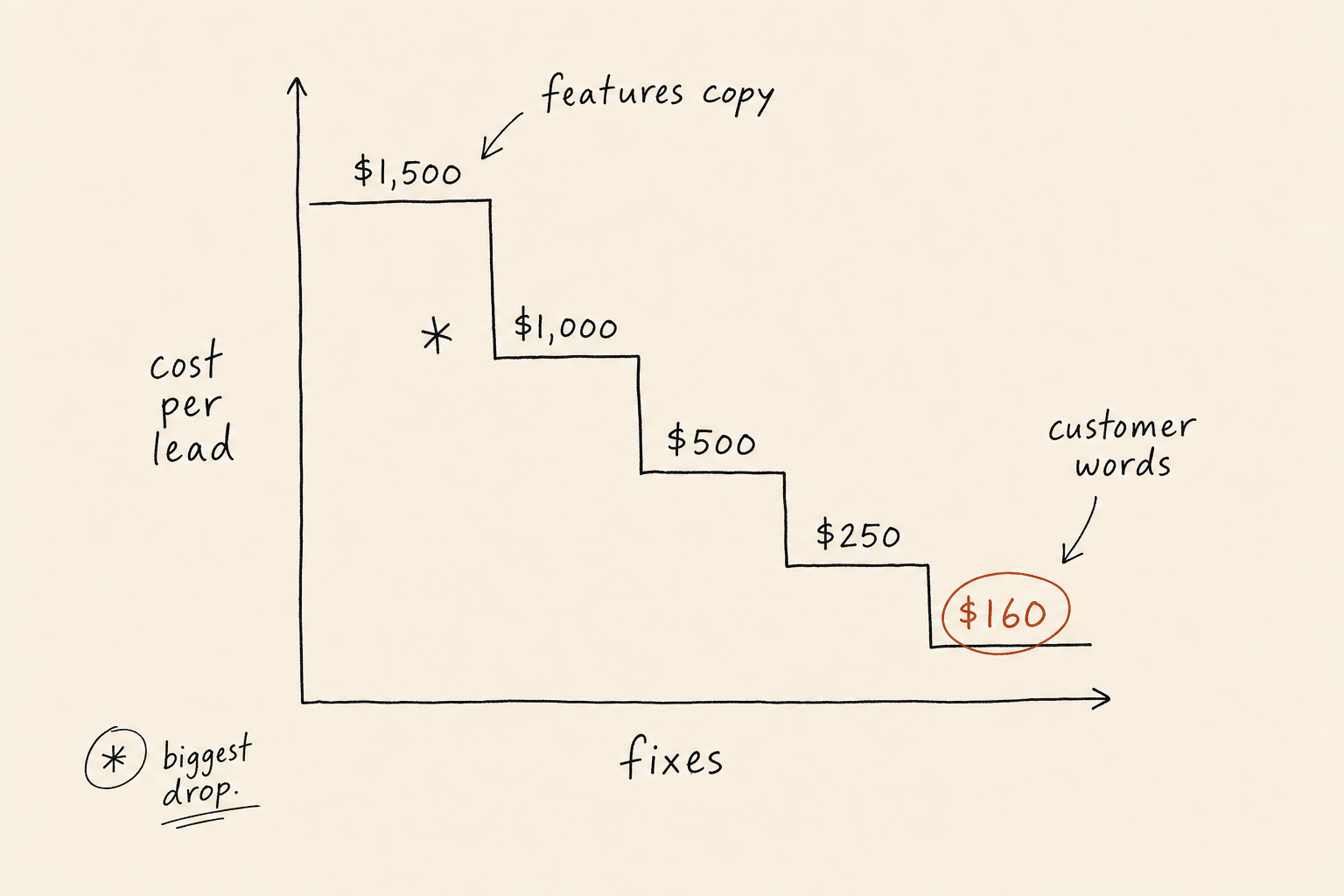
Same team, same product, same market. The words changed sides, from the company's story to the customer's problem, and the numbers followed.
Steal the Customer's Words
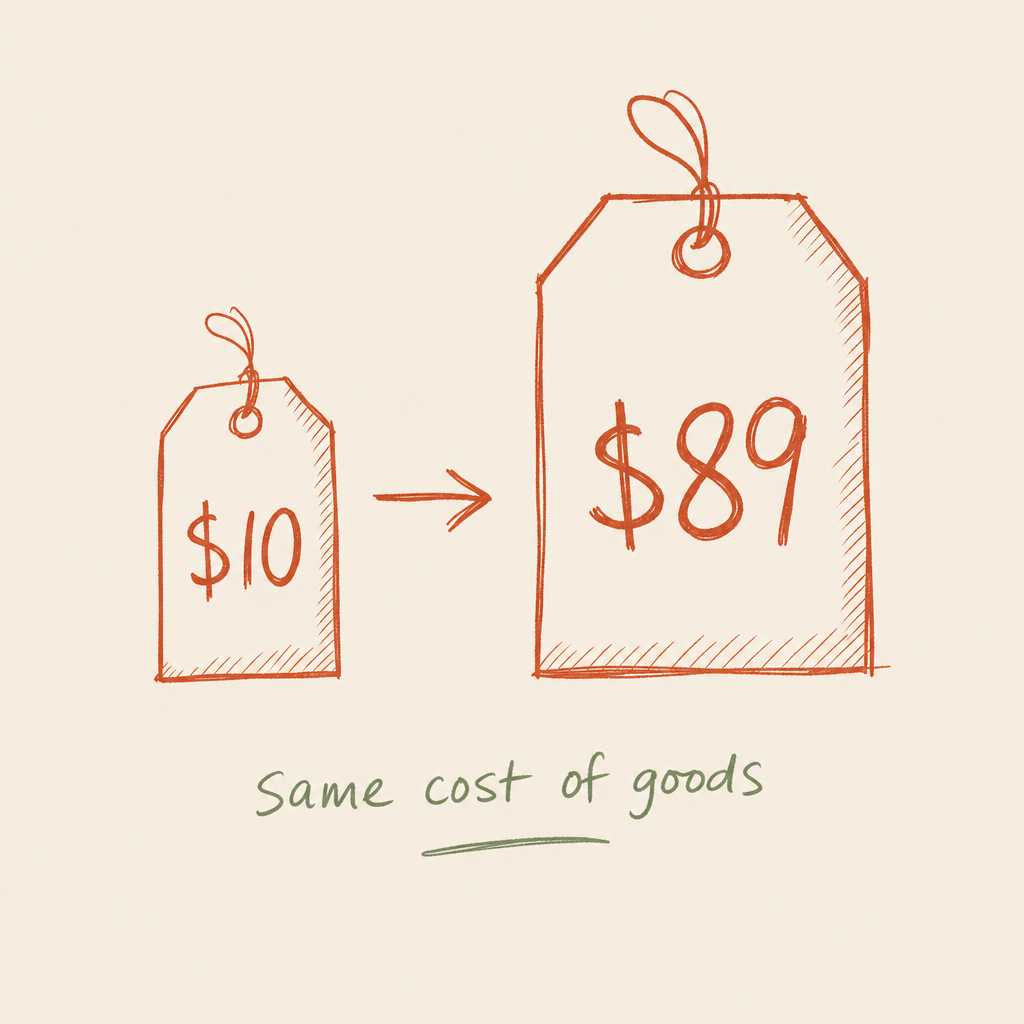
You can't out-write the customer's own language, so don't try. Before we draft a line for any account, we read reviews, support tickets, sales-call transcripts and the messy comments under competitor ads. The exact phrases real people use (“I'm sick of paying $90 a month for stuff I never use”) become the raw material for headlines.
One catch before you start mining: know whose words you're after. “Women 25 to 45” is a census bracket. It won't tell you which headline to write, which face to cast or which worry to open with. “A foreman who's been sold cheap gear before and can't stomach another dud on site” tells you all three. Define the buyer by the problem they're chewing on, then go and find the reviews where that problem turns up in their own words.
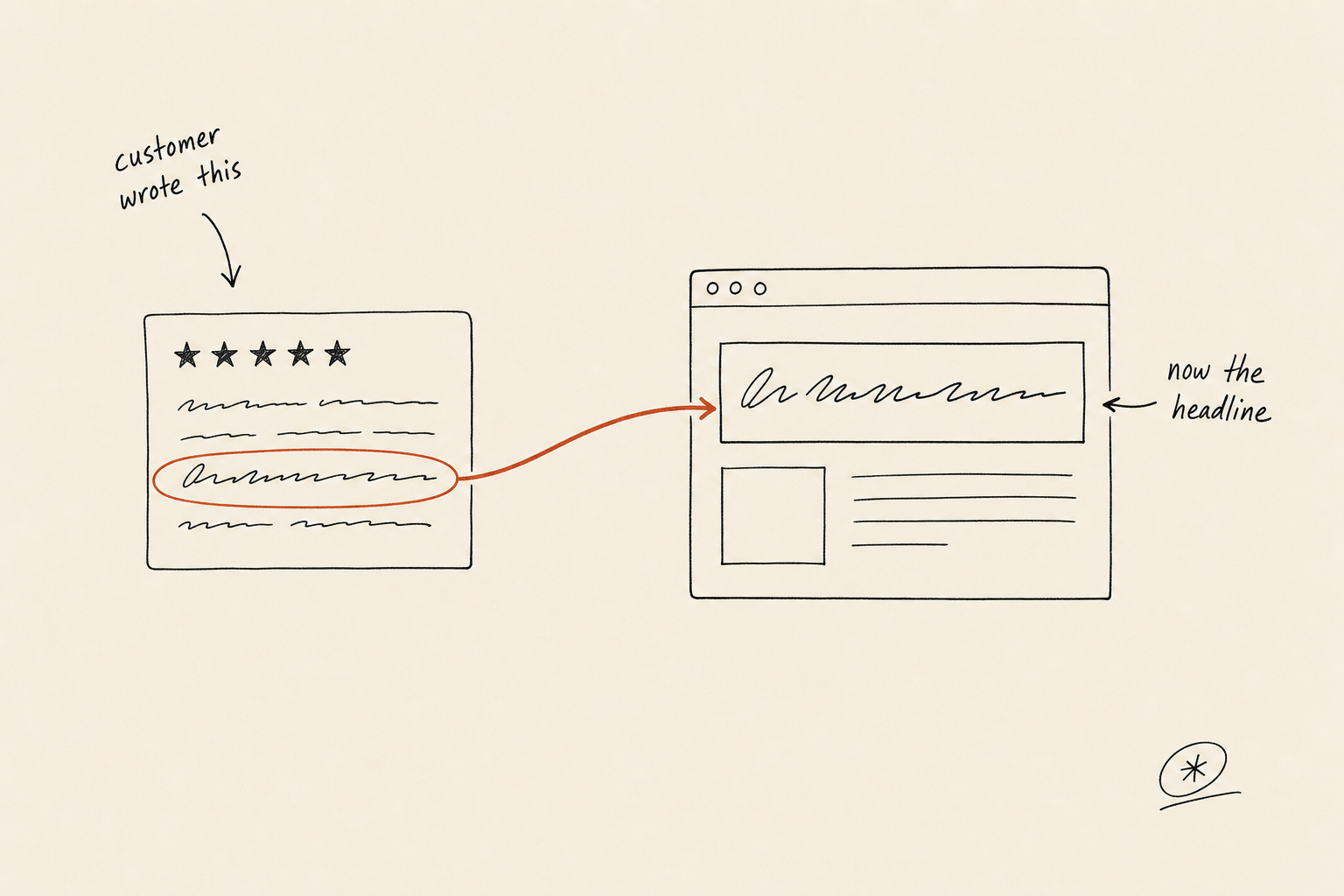
Here's the mechanic in practice. Say your five-star reviews keep repeating some version of “I finally got my Sunday nights back”. Don't file that under nice feedback. That's a finished headline, written by the one person your prospect actually trusts: another customer. Put it at the top of the landing page almost untouched, “Get your Sunday nights back”, and a new visitor reads their own wish word for word. No copywriter in a meeting room beats that line, and we've stopped trying to.
We ran the same play for an excavator attachment manufacturer with millions tied up in unsold stock. Their buyers had been burned by cheap gear before, and the sales team heard that same worry on nearly every call. So the landing pages skipped the steel grades and specs and opened with the words of real operators who'd bought the gear and put it to work. Ninety days later that client had a $1.2 million qualified pipeline and more than 300 tracked prospects, built from a standing start.
The Process We Run on Every Account
None of this is vibes. It's the same five steps on every account, and most of the work happens before a word gets written.
- Mine the customer's actual words. Reviews, tickets, transcripts, comments. Build a swipe file of real phrases before you draft anything, then promote the best ones straight into headlines.
- Lead with the outcome, not the feature. Nobody wants a heat pump. They want a warm lounge in July and a power bill that didn't make them flinch. Write the after, then let the product earn its place as the way to get there.
- Match the ad promise to the page word for word. If the ad says “$340 off your first install”, the landing page headline says “$340 off your first install”. Break that promise and you've paid for a click that bounces. This one fix recovers more wasted spend than any clever tactic.
- Write for the temperature of the traffic. Cold prospects need the problem named before they'll trust the solution. Warm retargeting audiences already know you, so skip the setup and answer the objection that's actually holding them back.
- Test it against real money, then rewrite. Ship two or three angles, watch which one earns the cheapest sale, and pour budget into the winner. The customer votes with their wallet. Count the votes.
A Line for One Person Beats a Line for Everyone
There's a quieter trap waiting once you start writing for the customer: the pull to write a line everyone likes. It feels safe. It's the opposite. A headline that stops everyone tells the algorithm to go and find you more of everyone, and most of everyone will never buy what you sell.
Meta watches who leans into the first line of an ad, then hunts down more people who act like them. So the opening has one job: flag down the buyer you actually want and let the wrong people keep scrolling. A line that names a Hamilton homeowner with a freezing lounge pulls a smaller crowd than a line about “affordable comfort”, and it pulls a far better one. Fewer clicks, cheaper sales, a cleaner read on who's buying.
Start narrow on purpose. A tight callout forces a sharper line and hands the platform a clean signal on who's responding. Once that message proves it can pay its way, widen the callout and let it reach further. Go broad and vague on day one and you just teach the algorithm to spend your budget on people who were never going to care.
Your Brand Is a Supporting Actor
The storytelling manuals dress this idea up in heroes and guides. The plainer version: every buyer is the main character of their own week, and your brand gets a walk-on part at best. They're reading your copy for one reason: to find out something about themselves. Is this problem normal? Can it be fixed? What does life look like once it is? Write scenes where the customer can watch themselves winning, and let the product be the thing that made the win possible. The moment the brand grabs the spotlight, you've asked a stranger to care about you before you've given them a reason to. Strangers don't.
Run the Out-Loud Test
Before you publish the next ad, page or email, read it out loud. Does it sound like something your customer would say to a mate, or like a company reading its own brochure? If it's the brochure, the rewrite isn't finished.
This is most of what we do at Told: direct-response copy and landing pages built from customer language, then tested against real spend. If your ads are getting clicks that never turn into sales, send us the page they point at. We'll tell you which lines we'd rewrite first, and show you the customer words we'd build the new ones from.